
THE NATURE REPORT
September 2008
Home page
THE NATURE REPORT
September 2008
Home page
|
They feed mainly on fish, frogs and other aquatic animals, although it is not unknown for them to take the occasional small mammal. Herons can be found hunting fish in almost any body of water from salt water estuaries to small ornamental pond in your garden.It is surprising how tasty Mr heron finds your prized koi carp.
On the left, a blur of motion and its all over for the hapless acorn.
This year has been a poor year for many types of butterfly with far fewer being seen than we normally have.
Here one feeds on the nectar from the flowers of a ragwort. The ragwort is known as a plant that is poisonous to animals which ingest it, particulary horses and cattle. The plant contains what are known as "Pyrrolizidine Alkaloids" these, when eaten pass through the digestive system and into the blood stream. From there they enter the liver where they are broken down and it is the products of this breakdown that are toxic and result in liver damage and potentially death from liver failure. While eating the plant will result in poisoning, there is some debate over the effects of absorbtion through the skin as may occur if you are attempting to clear the plant by hand, personally I would say leave the plant alone and let experts deal with it. While there may have been a reduction in the number of Butterfly's, there has been no lack of Dragonfly's.
The photographs above show two of the many species of Dragonfly that seem to be the common insect of the year.
If I'm honest I had given up on the idea of spotting anything els to photograph at this point, and had she not moved I doubt that I would have spotted her. Well thats it for this month. See you next time. Previous Page / Back to September Journal / Home page
|
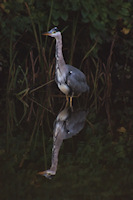 Down by the river Dane, this Grey Heron slowly made its way along the river looking for food.
 In the photograph on the right Mr Squirrel prepares to pounce as he stalks an acorn.
 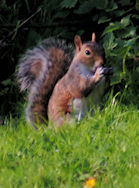 Finally, to the victor the spoils.With a quick bite from his razor sharp incisor teeth, Mr Squirrel puts the acorn out of its misery and tucks in to a tasty lunch.
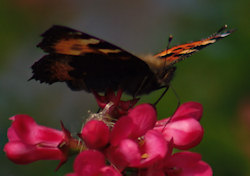 Also tucking into it lunch, is this Small Tortoise shell butterfly.
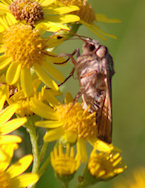 In is not just the butterflys that seem to have reduced numbers, moths too seem somewhat scarce this year.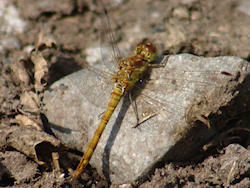

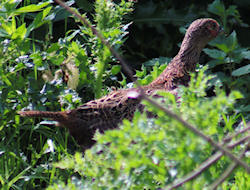 Finally on my return up the cattle drive, this female pheasant makes a move for better cover.